

A Master Bartender’s Thoughts on the Royal Hotel’s Bars
The World of Delicacies Vol.4
Master Bartender Takayuki Furusawa,
RIHGA Royal Hotel Osaka, Vignette Collection
Master bartender Takayuki Furusawa has dedicated his career to crafting exceptional drinks for discerning customers. Here he reflects on the appeal of the Royal Hotel’s bars.
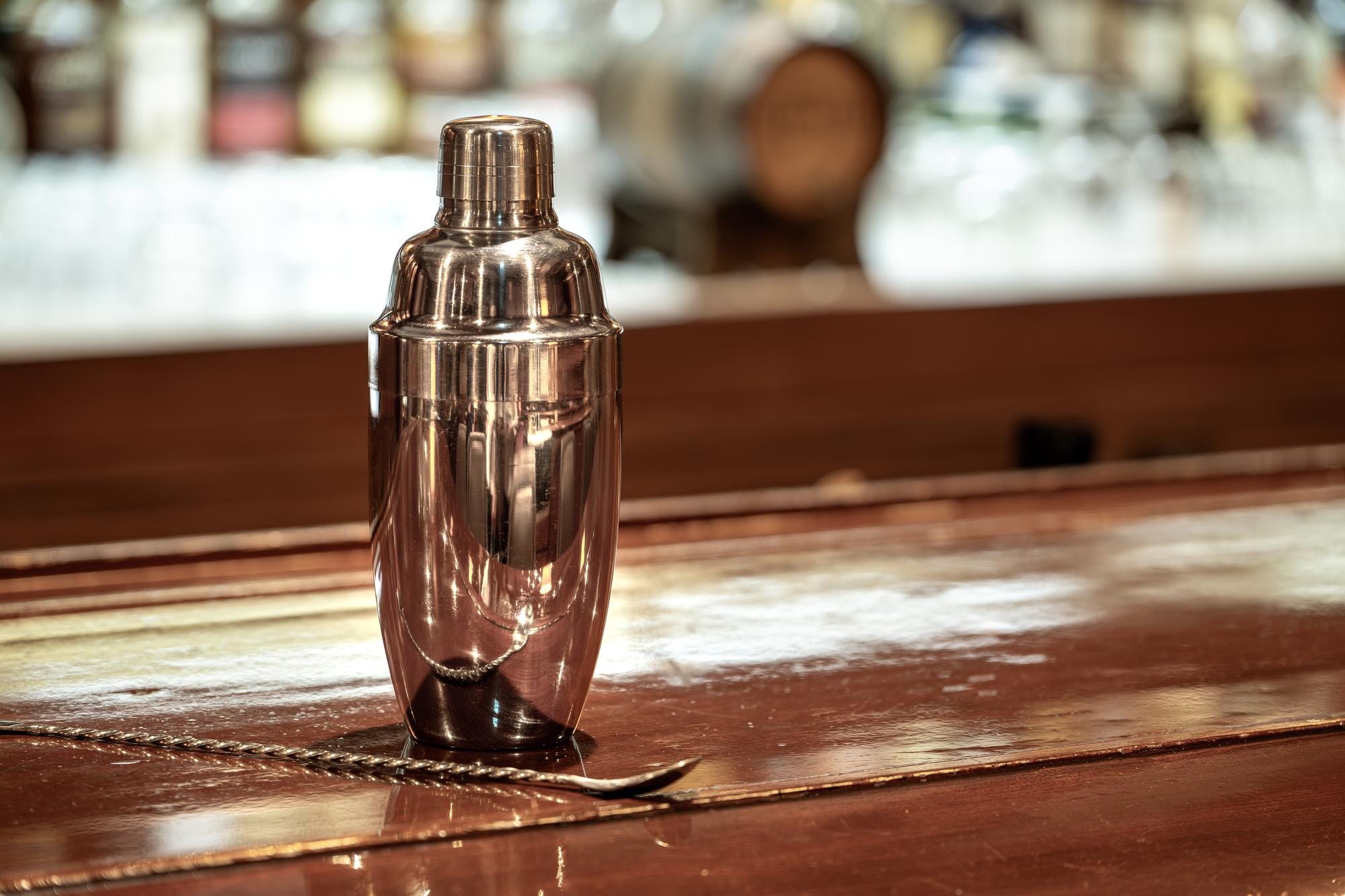
It all started with my homemade “Cocktail Memorization Notebook”
My father was a stage actor who specialized in sword fighting. I was interested in acting, but I didn’t pursue that path and instead had vague thoughts about working in hospitality. I accompanied my father to hotels sometimes when he was on business, and was impressed by their sophisticated, stylish interiors, uniforms, and so forth. I decided I wanted to work in a hotel in the future and went to a vocational college after graduating from high school.
During my time at the vocational college, I worked part-time as a waiter at a hotel bar. Once a customer looked at the menu and asked me “What’s in this cocktail?”, and I couldn’t answer. So I asked my senior colleague, and he said “brandy, Cointreau, and lemon juice.” When I told the customer that, they of course asked “What’s Cointreau?” (laughs). I blamed myself for not knowing these things and bought a cocktail book at the bookstore the very next day.
As I studied the book, I began to see how each cocktail was constructed—the base and what was added to that. I realized things like “If I substitute gin for vodka, I can make a different drink.” I created my own cocktail memorization notebook, like vocabulary flashcards for English, and found memorizing everything fascinating. If I’d studied that hard in school, my grades would have been so much better. Looking back, what a missed opportunity that was! (laughs)
The hotel bar I where I wanted to work and my “achievable goal”
After graduating from vocational college, my sights were set on working at a proper hotel bar. When I asked around, everyone said the same thing: “If that’s what you want, it’s got to be the Royal.” In the late 1980s, the only options were the RIHGA Royal Hotel and maybe one or two other prestigious hotels in Osaka. This was just when newer hotels were just starting to appear.
I was aiming for the best and aspired to the RIHGA Royal Hotel, but the competition was fierce and new employees rarely get assigned to the bar right away. My vocational college instructor warned me before the company entrance exam to “say you’ll do anything,” but during the interview I flatly stated “I want to work in the bar!” I didn’t want to compromise on that point.
In 1989, I successfully joined the company. My first assignment was the Sky Lounge on the top floor. The RIHGA Royal Hotel has the Leach Bar on the first floor and Cellar Bar on the second basement level, but at that time there was also the Sky Lounge as a place to enjoy nighttime views and drinks.
When you ascended in the glittering escalator, the views were absolutely breathtaking on both the west and east sides. But you can get tired even of a spectacular place like that when you work there every day (laughs). The hall had 100 seats and the counter had 10 seats. Since I couldn’t work behind the counter and was stuck in the hall, I felt a little stressed.
To overcome that stress, I decided to try getting more customers to ask “Is Furusawa working today?” By working creatively and putting effort into my daily tasks, I gradually gained recognition and was finally able to work behind the counter as I’d always wanted.
The customer who made me realize my immaturity
Once I achieved that goal, new ideas cropped up, like “These cocktail recipes are outdated” or “If they’d give me more authority, I could run things better.” I was probably working with a dissatisfied expression on my face every day.
One day, a regular customer sitting at the counter in front of me asked, out of blue, “I bet you want to quit Royal and go independent…” He even offered to help provide financial backing. I was elated. But when I thought about it calmly, I didn’t understand the process of going independent or how much money it would require.
When I politely declined, saying “I’m grateful for the generous offer, but I don’t think I have what it takes to meet your expectations,” he replied, “You realized you still have some things to learn here.” He had seen right through me.
Another customer told me that developing younger talent is just as important as improving yourself. There were times when I failed at customer service and got scolded by guests, but from the time I was young, I was blessed with customers who gave me valuable advice at important turning points. I think that was the starting point of a fortunate life as a bartender.
What I realized from entering contests
At that time, my senior colleagues at the RIHGA Royal Hotel were officers of the Hanshin Branch of the Hotel Barmen’s Association, Japan (HBA). They competed in cocktail contests, so I too was looking for opportunities. If you place in a contest, you gain recognition, and people remember you as someone who can make delicious cocktails.
Our company is a large organization, so first you have to win the internal preliminary rounds. From there you advance to the Hanshin preliminaries and then to the national competition, but for a long time I couldn’t make it to nationals. Even so, I always went to see the national competition in Tokyo. I wanted to know what kind of person wins such a context.
I was finally able to advance to the national competition in 1994. I won the Silver Prize that time with a cocktail called “Primitive Love” using carrot juice. But it took a while longer before I could actually win first place.
Contests reveal a bartender’s entire character as a human being. Not just their poise in making cocktails and creating flavors, but everything—even their aesthetic sense, including the books they’ve read, movies they’ve watched, and paintings they’ve seen. That’s what made it fascinating but also difficult, in my view.
The two essential elements for original cocktails
In 1997, I won my first championship with a cocktail called “Takarasienne.” I developed the concept from the story behind “When the Violets Bloom,” a song that symbolizes the Takarazuka Revue, and used osmanthus wine as the base while considering both the ingredients and appearance. By arranging the garnish elements in perfect balance, I think I was able to express value transcending just “delicious.” After I won, an actual Takarasienne came to the bar and said it was delicious, which was also a memorable event.
I encourage my junior colleagues to actively participate in contests. Your world gets too narrow if you spend all your time at the hotel bar where you work. There are lots of people with better skills than yourself, and competing with them will definitely broaden your world. Whatever motivates you is fine. Winning is nice, of course, but losing is also a good experience. People who are frustrated by losing will definitely be driven by that loss to improve the next time.
What matters most in contests is how well you can conceive of a concept and story for your original cocktail. I always tell people to spend half their time on those two elements. Of course cocktails need to taste delicious as a prerequisite, but when those two elements are clear, a value beyond delicious flavor is communicated to the customer.
I won again in 2001, but after 2003 I stopped competing and took on the role of supporting my younger colleagues’ efforts. The advice I received from a customer long ago to “develop younger talent” came into play here. If those younger than me can accomplish in five years what took me ten years, I consider that my own success.
The younger generation is now carrying on the tradition that “the RIHGA Royal Hotel is strong in cocktail contests.” The hotel makes promotional displays for winning cocktails, and customers who see them order by requesting “the award-winning cocktail.” The hotel even introduced a “President’s Award” recognition system that didn’t exist in my time—which makes me a little envious—but watching younger staff compete with sparkling eyes that want to improve makes me feel young again.
Two bars that symbolize RIHGA Royal Hotel
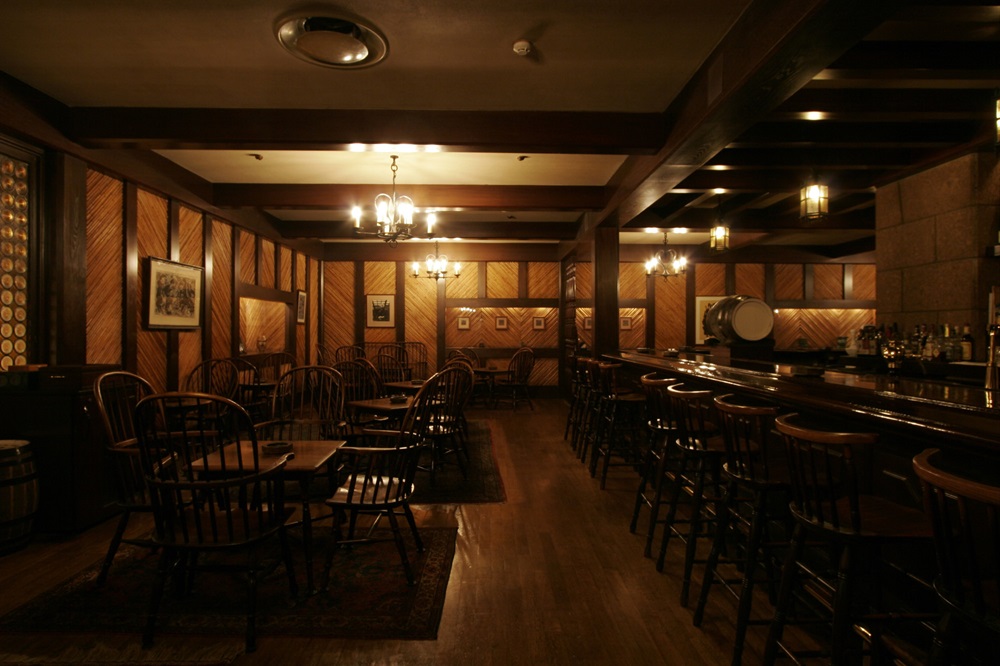
The Leach Bar on the first floor, the hotel’s flagship establishment, is more like a downtown bar. There’s no background music at all. Guests are welcomed with wooden floors, wooden chairs, and Mingei folk art pieces. Customers’ footsteps and voices when they enter, blended with the sounds of the bartenders making drinks, serve as the Leach Bar’s “background music.”
The world-renowned conductor Takashi Asahina (1908–2001) seemed to enjoy these sounds as part of the experience, and he was a very elegant customer who would have one drink and gracefully go home.
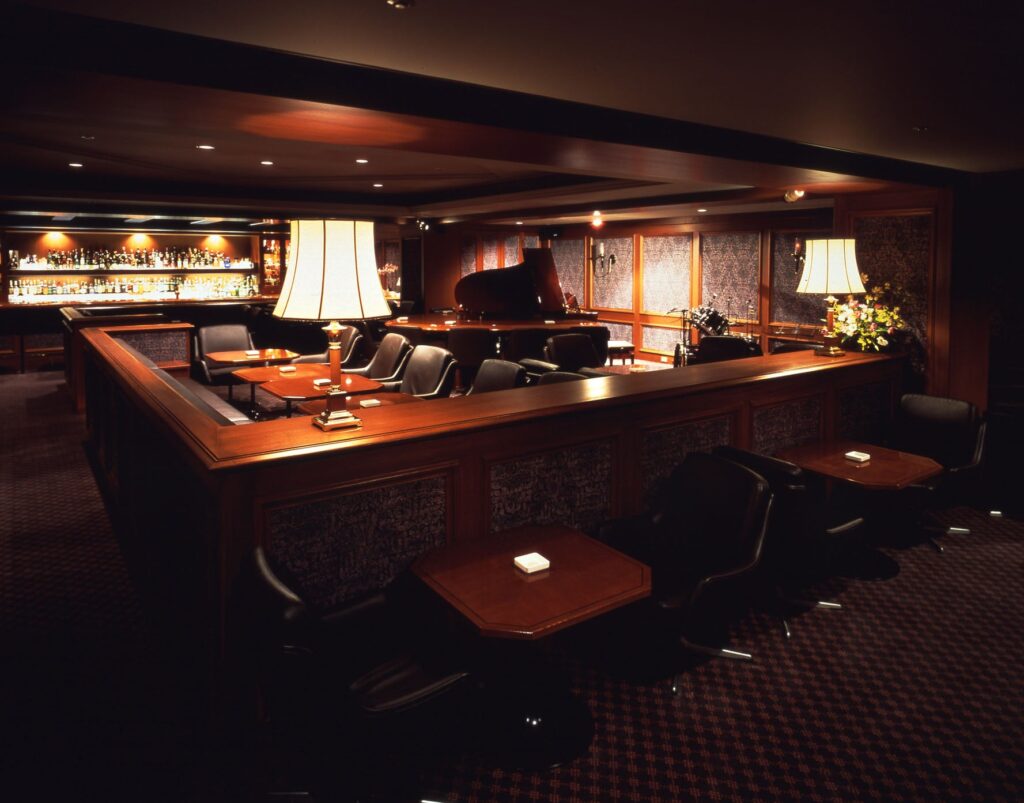
In contrast, the Cellar Bar on the basement level is a 140-seat establishment befitting a hotel grand bar, with background music and live performances, as well as a separate karaoke room. It’s a place where large groups can enjoy themselves, and individuals can relax alone at the counter.
We’re especially proud of having our own dedicated kitchen. When customers order food at other hotels, they usually have it delivered from the dining room, but at our Cellar Bar our own chefs prepare everything from appetizers to grilled items to desserts in our own kitchen. Our okonomiyaki (savory pancake, an Osaka specialty) is popular, as you’d expect from an Osaka hotel, so we hope you’ll try it.
Customer behavior has changed dramatically since the COVID-19 pandemic, but we want to continue meeting the expectation that you can get great, delicious drinks at RIHGA Royal Hotel.
For the future of hotel bars
Foreign hotels have been proliferating in Osaka like elsewhere in Japan. I think the nature of bars is also changing. The idea has spread that having a bar as a standalone establishment is “inefficient,” so bars should be placed in one corner of a large, gorgeous dining space.
It would be fine if customers were satisfied with the drinks served in those spaces, but I sometimes hear differently. Developing bartenders who make customers think “I want to go back to that place” is just as important as money spent on equipment and interior design.
What worries me is customers who think: “hotel bars are nothing special.” If there are no longer people who can make proper cocktails, no one will have expectations for hotel bars anymore. That’s why I personally go beyond the framework of RIHGA Royal Hotel and travel to training sessions to teach bartenders in rural areas who don’t have many opportunities to learn.
Young people are drinking alcohol
There seems to be a misunderstanding that “young people don’t drink alcohol,” but from my perspective, it’s only that their drinking approach and style are different. Young people are definitely drinking at the places they go to. There are just fewer opportunities for bosses to take their younger subordinates out drinking like in the old days, and the types of establishments they go to are different. That’s all.
That kind of scene has become less common in our establishment too, but conversely, it’s not uncommon for young couples to visit us. When they order cocktails, we get excited to make them. The challenge is whether we can get them to think “This is delicious, I want to come back again.”
Being a bartender is a profession where the perennial question is “What are customers looking for?” The answers vary tremendously, and the right approach for someone who comes in thinking “I want to have a conversation” is completely different from the right approach for someone who’s thinking “I want to drink quietly by myself.”
That’s something that remains difficult no matter how many years you do it, but there’s nothing to do except to always grasp what the customer in front of you is looking for and give your all to satisfy them. Contests and regular business operations are the same in terms of providing what’s being sought. It’s work that never gets boring and is always interesting.
When you come to a RIHGA Royal Hotel bar, try sitting at the counter if possible, and don’t just order drinks—try talking to the bartender. I can say this with confidence: they all have pretty interesting stories to share.
Interview and text by Jun Nakashima
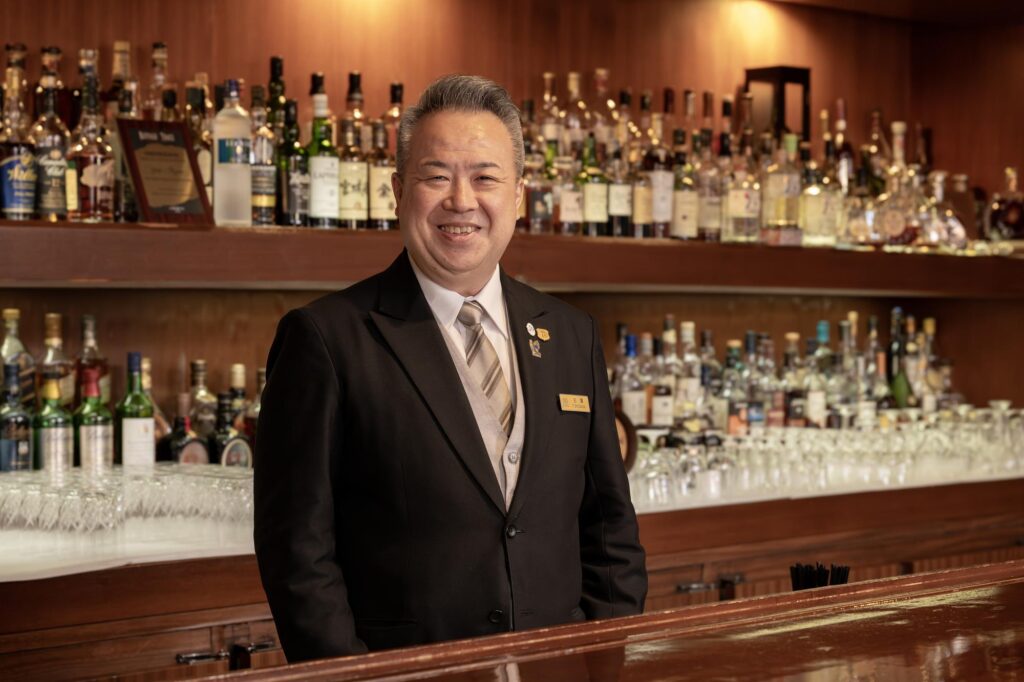
Takayuki Furusawa
Master Bartender, Food and Beverage Department
RIHGA Royal Hotel Osaka, Vignette Collection
Takayuki Furusawa was born in Osaka in 1968. He joined the Royal Hotel, Limited in 1989. After working at the Sky Lounge, he became Chief Bartender at the Leach Bar and was promoted to Manager. He subsequently served as Assistant Manager of the Food & Beverage Department while concurrently managing Restaurant Chambord, Counter Kappo Miotsukushi, and Japanese Restaurant Nakanoshima. He is currently working as a Master Bartender while striving, even outside the company, to cultivate junior staff and improve the overall level of hotel bars. He won national cocktail competitions in 1997 and 2001, and combines three qualities: captivating the customer with the efficiency and poise of his craft, serving delicious drinks, and helping customers relax. He is Vice President of the Hotel Barmen’s Association, Japan. In 2016, he became the first hotel bartender to receive the Osaka Prefecture Outstanding Craftsman Award “Naniwa no Meiko.” In 2023, he was inducted as a “Chevalier” into the Ordre des Coteaux de Champagne. (French Champagne Knights). He is author of The Rules of Success Drinking Seen from Behind the Counter: Why Do Men who are Capable at Work Order Daiquiris Instead of Martinis? (Kodansha+α Shinsho, in Japanese).
RIHGA Royal Hotel Osaka,
Vignette Collection
Leach Bar
Phone: +81(0)6-6441-0983 (direct)
1st Floor, 5-3-68 Nakanoshima,Kita-ku, Osaka, Japan
RIHGA Royal Hotel Osaka,
Vignette Collection
Cellar Bar
Phone: +81(0)6-6448-0327 (direct)
2nd Basement Floor, 5-3-68 Nakanoshima,Kita-ku, Osaka, Japan
Share



Like