






A Book That Shows Kukai, a Charismatic Figure of the Buddhist World, Was Human Too
Books and Hotels
People talk about their favorite books to read at hotels from their unique perspectives.
Vol. 6 Yasufumi Nakoshi (Psychiatrist)
Yasufumi Nakoshi is a psychiatrist, commentator, and prolific author who experienced a mental crisis at age 48—what he describes as “hitting rock bottom.” At the time, his daily life seemed fulfilling and everything was going smoothly, so why did this happen? And what book does Nakoshi recommend that helped him overcome the crisis?
The words of a Grand Master... that sank in years later!
When I hit rock bottom mentally, I was tormented by worries that I couldn’t grow any further as a human being. I was trapped in the depths of confusion and distress, wondering what would give my life direction going forward. Around that time, I had the good fortune to meet a Grand Master at a Shingon Buddhist temple. I admired him greatly, and for 16 years, I never failed to visit the temple twice a month.
The Master would spend over two hours every morning and evening making rounds to all the halls on the extensive temple grounds to worship the Buddhas. As he worshipped, I would sit on the tatami mats behind him. Sometimes I was alone, and other times as many as ten people would come, and we would all trail along behind the Master as he made his rounds of the temple grounds. He would say, “You must be getting tired, shall we take a break?”, and then he would listen to our questions about Buddhism and our personal troubles. I often didn’t grasp the meaning of those exchanges right away. But then at certain moments, his words would suddenly hit me hard in my chest or gut, and the meaning would sink in on a personal level. Even years later, his words would hit me powerfully in my core (laughs). When someone has undergone genuine spiritual training for many years, their words are different. They strike you with incredible force, as if a whole life were behind them. I would often arrive at the temple with a heavy heart, but on the way home, I would feel a sense of lightness wash over me. I realized that beyond my home and workplace, I had this precious place—the temple—and that going there could clear my mind so completely! That realization sustained me. Little by little, I recovered from my crisis, and eventually I became more energetic and vibrant than I’d ever been before.
My first encounter with Buddhism actually happened much earlier, in my younger years as a university student. I read a book called The Buddha by Fumio Masutani, which my grandfather, an internist, had recommended to me. At the time, I didn’t really understand the content of the book, but from then on, Buddhism was always somehow familiar to me. Perhaps the Master’s words penetrated my being due to that foundation. Today, I know that behind the Master’s teachings, there was always the teaching of Kukai.
Feeling close to Kukai as a human being... to how he lived his life
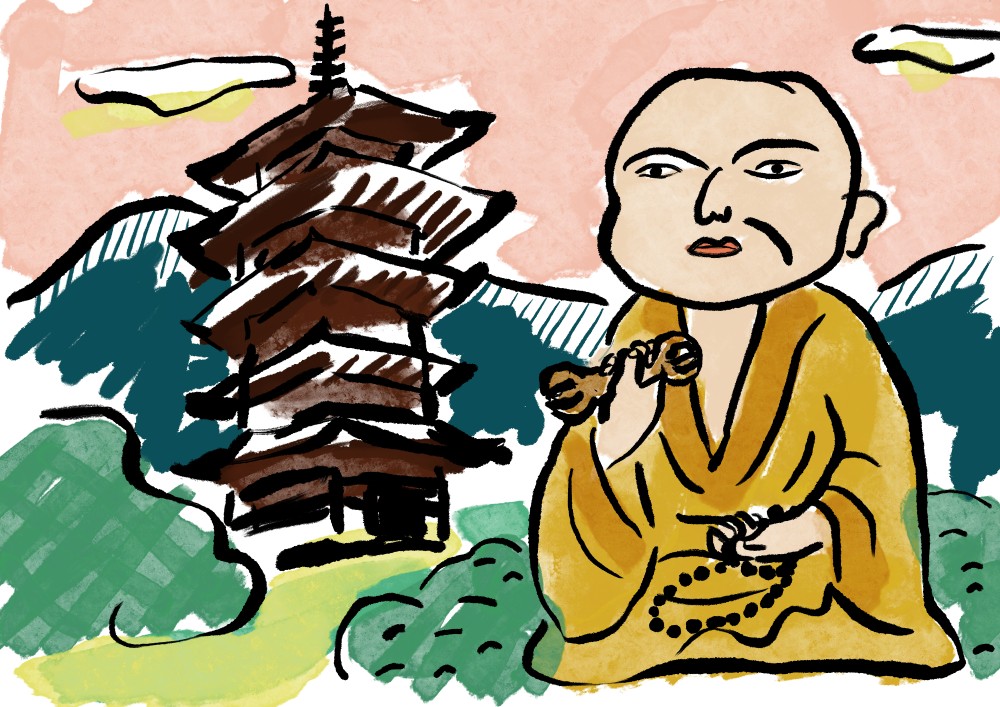
The book I’m recommending this time, The Life of Kukai: So Fascinating You Won’t Be Able to Sleep (in Japanese) is a work that faithfully portrays the life of Kukai, the charismatic figure and renowned monk of the early Heian Buddhist world. The young Kukai struggled intensely, and fell into despair, yet he burned inside with a passion for learning. You come away thinking, ah, Kukai too was just a human being, and you feel a real closeness to him. Naturally there are fictional elements, but the author has very meticulously traced Kukai’s footsteps based on historical facts, down to the finest detail. It’s precisely because of this solid foundation that the human Kukai, who progresses from adolescence to adulthood and ultimately becomes a central figure of Japanese Buddhism, is so splendidly portrayed, making this truly a book you’ll want to stay up late reading.
Under Emperor Saga, Kukai established To-ji Temple as the basic training center for esoteric Shingon Buddhism and he spread the Shingon sect throughout the country, rising to the very pinnacle of success. Yet in his mid-fifties, he abruptly relinquished his position and power and withdrew to Mount Koya. At that time, Mount Koya was likely still a remote mountain location where the land hadn’t been developed, a place you couldn’t really return from easily. To abandon such stunning success and splendor and retreat to the deep mountains… I don’t know many other figures in world history, besides Kukai, who have carried off a transition like that. Emperor Saga, who relied on Kukai for spiritual support, repeatedly begged him to return to the capital, but Kukai declined, saying he would “carry out all the Buddhist rites while remaining on Mount Koya.” Perhaps he meant something like: “I am properly praying on Mount Koya for the peace of all the world and this country, and for the success of Emperor Saga’s governance.” It’s such a humble scene, clean and refreshing, one that clears the heart. As you turn the pages, you get a sense of how Kukai the man carved out his own life and lived it with such strength and conviction.
Buddhism teaches us how to live and how to die
One scene in this book that captivated me is when Kukai encountered a sutra called the Mahavairocana Sutra, found truth within its text, yet unable to fully grasp its meaning, resolved to risk his life on a voyage to Tang China. This sutra that determined Kukai’s fate contains a very famous teaching called the Three Phrase Doctrine. The three phrases are: bodhicitta (aspiration to enlightenment), great compassion, and skillful means. In modern terms, bodhicitta means resolving to grow beyond the narrow confines of the self—because the heart can grow without limit. Great compassion means empathizing with the hidden sadness within all people in order to achieve that growth. Finally, skillful means is living by comforting and helping those who are overwhelmed by sadness. The teaching holds that if you pledge these three principles every morning and live your days by them, your fortune will change for the better and you will surely lead a satisfactory life.
As I see it, Buddhism teaches us how we can live and die with a sense of fulfillment—how we can make each day as full and complete as possible, and then, when the time comes to die, be content that we had a good life. Teaching us how to live and how to die is, surely, the very essence of Buddhism. By drawing us into the life of the great figure Kukai, this book serves as an entry point to learning the living teachings of Buddhism. If possible, I hope you will take a little break from your everyday life and work, and read it while relaxing at a hotel as you travel. And of course, turn off your phone as well (laughs). If you empty your head, your heart, and your body, and read this book in a quiet, open state, the words will slip gently into your mind like the words of a Grand Master… It’s perfectly fine if you don’t get the meaning right away. First, I hope you will see Kukai as a flesh-and-blood human being, not a superman or a hero. Isn’t it encouraging when you realize there was a Japanese person with such lofty aspirations? The world in his time must have been hard to live in, just like today’s world. I definitely hope you will read the story of this extraordinary human being who swept through that world like a gust of wind.
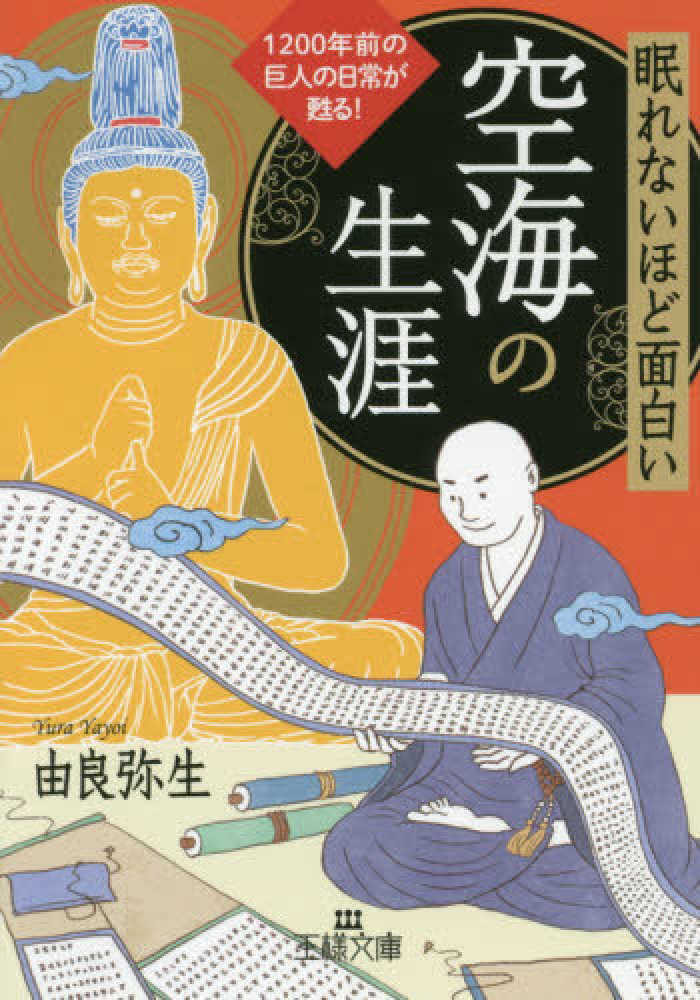
The Life of Kukai: So Fascinating You Won’t Be Able to Sleep (by Yayoi Yura, Mikasa Shobo Co., Ltd., in Japanese)
Kukai was a remarkable figure who swept through an era of great change, when the capital moved from Nara to Nagaoka to Heian. He gave up the path of an elite bureaucrat, encountered the Mahavairocana Sutra during mountain ascetic practice, and—after traveling to Tang China—accomplished many great deeds, including founding Mount Koya and spreading Buddhist teachings at To-ji Temple. This book traces the turbulent life of Kukai, known posthumously as Kobo Daishi (“great teacher who spread the dharma”). Both Kukai as a living person and the backdrop of the era he lived in come vividly to life in these pages.
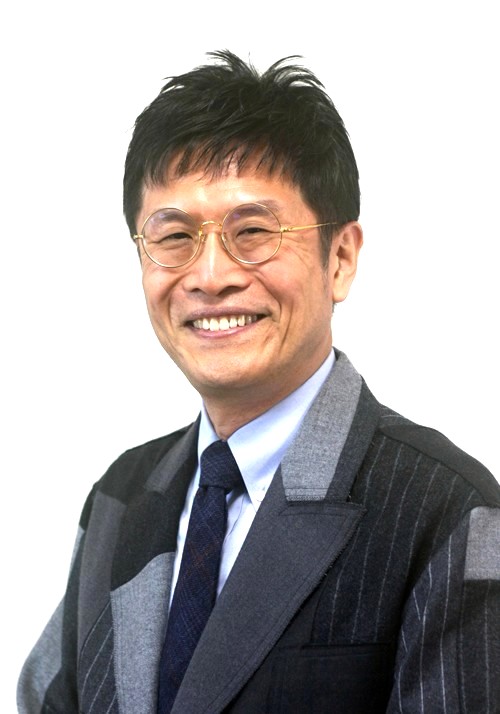
Yasufumi Nakoshi
Born in Nara Prefecture in 1960, Yasufumi Nakoshi is a psychiatrist and visiting professor at Soai University, Koyasan University, and Ryukoku University. His specialties are adolescent psychiatry and psychotherapy. After graduating from Kinki University Faculty of Medicine, he established and directed the psychiatric emergency ward at the Osaka Psychiatric Medical Center before leaving the hospital in 1999. Since then, he has continued his clinical work while actively working across various fields including television and radio commentary, film criticism, and manga analysis. His major books (in Japanese) include The Power to Be Surprised (Yakan Hiko / Next Publishing), Mental Techniques for Supporting Yourself (Igaku-Shoin), and Why Live When We’re Going to Die Anyway? (PHP Shinsho). His YouTube channel “Yasufumi Nakoshi’s Secret Talk YouTube Office” is also popular, with approximately 200,000 subscribers as of September 2025. He currently distributes the email newsletter “Dialogue for Living” and the correspondence course “Nakoshi-Style Personality Classification Seminar (Correspondence Course Edition)” through Yakan Hiko / Next Publishing.
Share



Like